



What to know before visiting Ait Ben Haddou
The Ksar of Aït-Ben-Haddou: A Masterpiece of Southern Moroccan Earthen Architecture
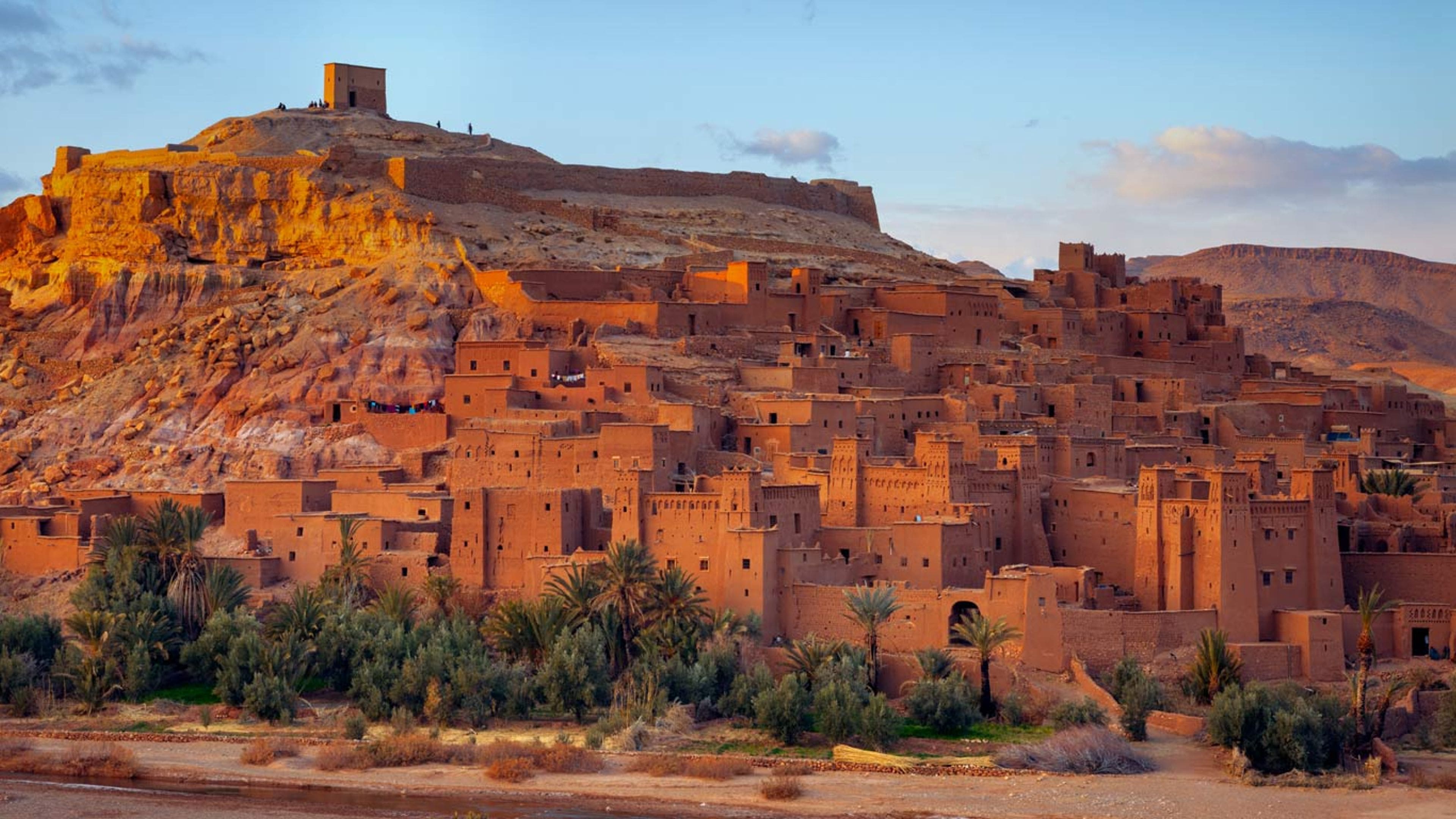
Located on the southern foothills of the High Atlas Mountains in the province of Ouarzazate, Aït-Ben-Haddou is the most famous of the ksour (fortified villages) in the Ounila Valley. A true jewel of Moroccan heritage, it stands as a remarkable example of traditional earthen architecture in southern Morocco.
The Ksar consists of a cluster of collective dwellings enclosed by defensive walls, reinforced by corner towers and accessed through a narrow gateway. Inside, modest houses stand alongside fortified mansions adorned with decorative motifs, as well as community structures such as a mosque, a public square, a granary, a caravanserai, two cemeteries (Muslim and Jewish), and the sanctuary of the saint Sidi Ali ou Amer.
This extraordinary ensemble presents a comprehensive illustration of pre-Saharan earthen construction techniques. The oldest structures date back to the 17th century, although these architectural methods have been used for centuries in the valleys of southern Morocco. Historically, Aït-Ben-Haddou also served as a trading post on the caravan route linking ancient Sudan to Marrakech via the Drâa Valley and the Tizi n’Télouet Pass.
Outstanding Universal Value
-
Criterion (iv): The Ksar of Aït-Ben-Haddou is an outstanding example of southern Moroccan ksour, illustrating the main types of earthen construction found since the 17th century in the valleys of the Drâa, Todgha, Dadès, and Souss.
-
Criterion (v): It represents traditional earthen dwellings characteristic of southern Moroccan culture, now vulnerable to irreversible socio-economic and cultural changes.
Integrity and Authenticity (2009)
All structures within the Ksar are included within the protected boundaries, and a buffer zone preserves its surrounding environment. However, due to the gradual abandonment of the site, the earthen buildings remain fragile without continuous maintenance.
The CERKAS (Center for the Conservation and Restoration of the Architectural Heritage of the Atlas and Sub-Atlas Regions) oversees the preservation of the site and safeguards its visual integrity.
Despite these challenges, the Ksar of Aït-Ben-Haddou has retained its architectural authenticity: its forms, materials (earth and wood), and harmony with the natural and social environment remain intact. Attempts to introduce modern materials such as cement have been successfully controlled, ensuring the preservation of its traditional character.
Protection and Management
The Ksar is protected under Moroccan Law 22-80 concerning national heritage. A five-year management plan (2007–2012) was developed after two years of consultation between institutions and local communities.
Two committees — one local and one national — coordinate and oversee the implementation of this plan under the supervision of CERKAS, ensuring the long-term preservation of this emblematic World Heritage Site
Location Map
Interdum et malesuada fames ac ante ipsum
